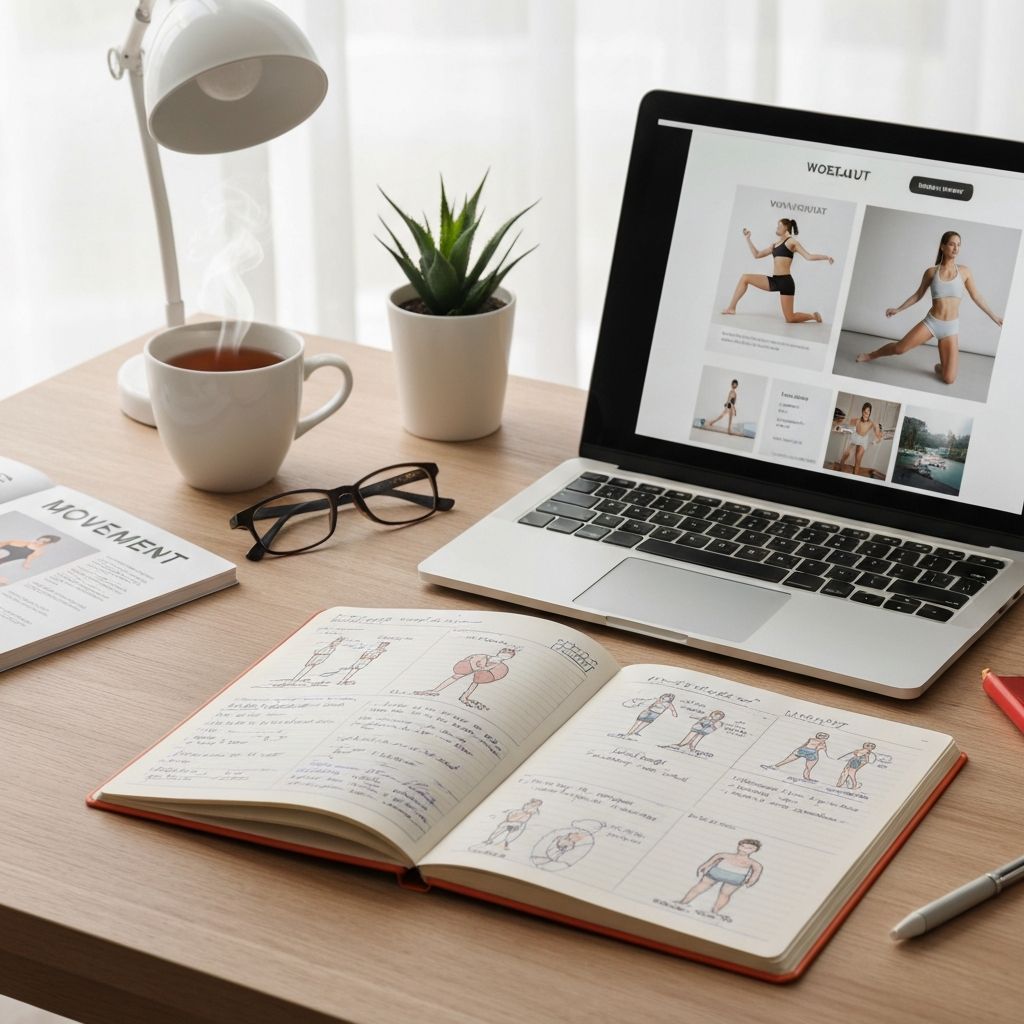
An educational resource exploring safe daily movements that may support joint mobility, flexibility, and comfort in everyday life. Educational content only. No medical services. No promises of outcomes.
Learn More
Joint mobility refers to the ability of joints to move freely through their natural range of motion. This concept encompasses the movement capacity of various joints throughout the body, including shoulders, hips, knees, ankles, and wrists.
Understanding how joints function and what influences their mobility is a topic of interest for many people seeking to maintain their everyday comfort and physical independence.
Several factors can influence how freely joints move, including daily activity levels, posture habits, age-related changes, and lifestyle choices. Many people explore gentle movement practices as part of their daily routines.
This content is provided for educational purposes only. It does not constitute personal advice and should not replace individual decision-making. Different approaches exist in everyday life, and what works for one person may differ for another.
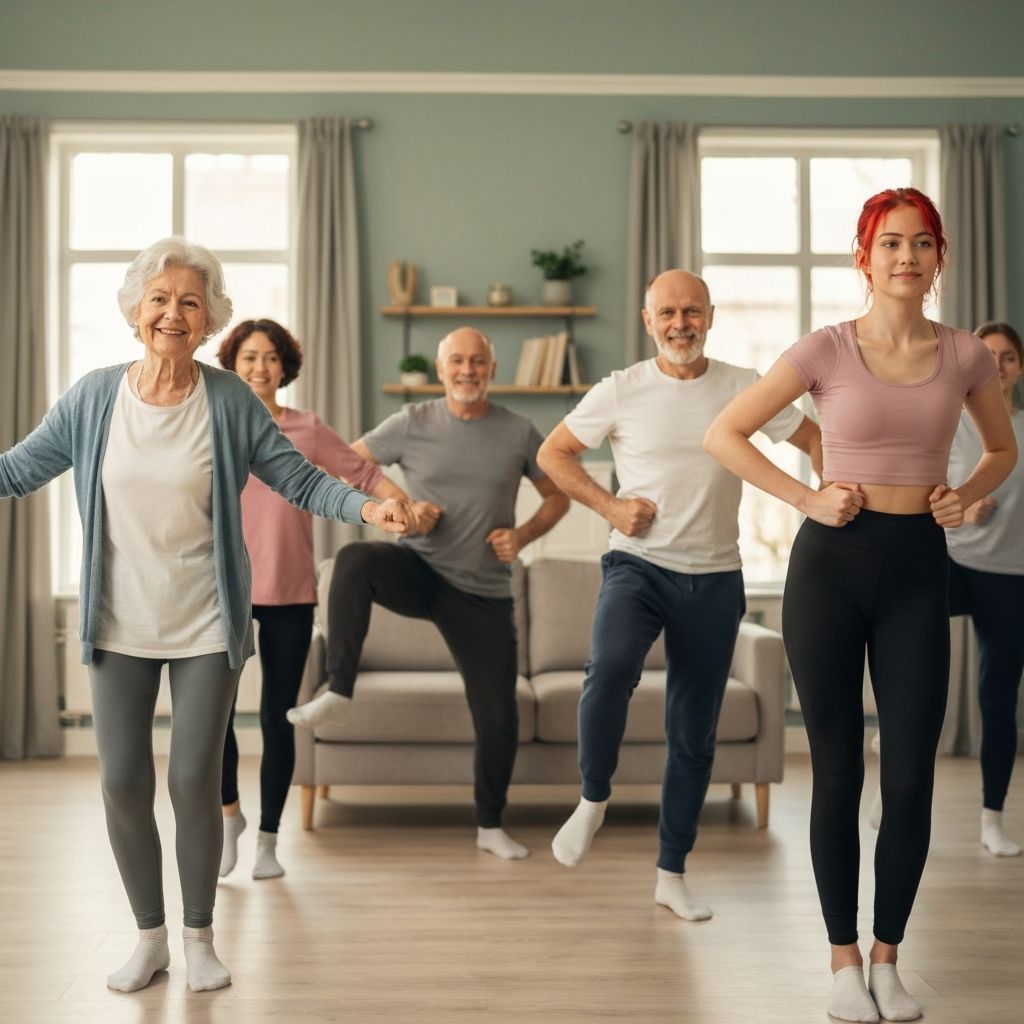
Regular gentle movements may help maintain the natural range of motion in joints. Many people incorporate simple stretches and movements into their daily routines as part of their overall wellness approach.
Some individuals find that consistent movement practices contribute to their sense of physical comfort during daily activities. The relationship between movement and comfort is a topic many explore personally.
Maintaining mobility is often associated with the ability to perform everyday tasks independently. Many people value understanding how movement fits into their broader lifestyle considerations.
Practicing intentional movements can help develop greater awareness of how the body feels and moves. This awareness is something many people find valuable in understanding their physical needs.
Establishing consistent movement habits is a practice that many individuals incorporate into their daily schedules. Different people find different times and approaches that work for their circumstances.
Gentle movement practices often emphasize the connection between physical movement and mental focus. This integrated approach to movement is explored by many in various cultural and personal contexts.
The following section describes common stretching movements that many people incorporate into their daily routines. These descriptions are for educational purposes only.
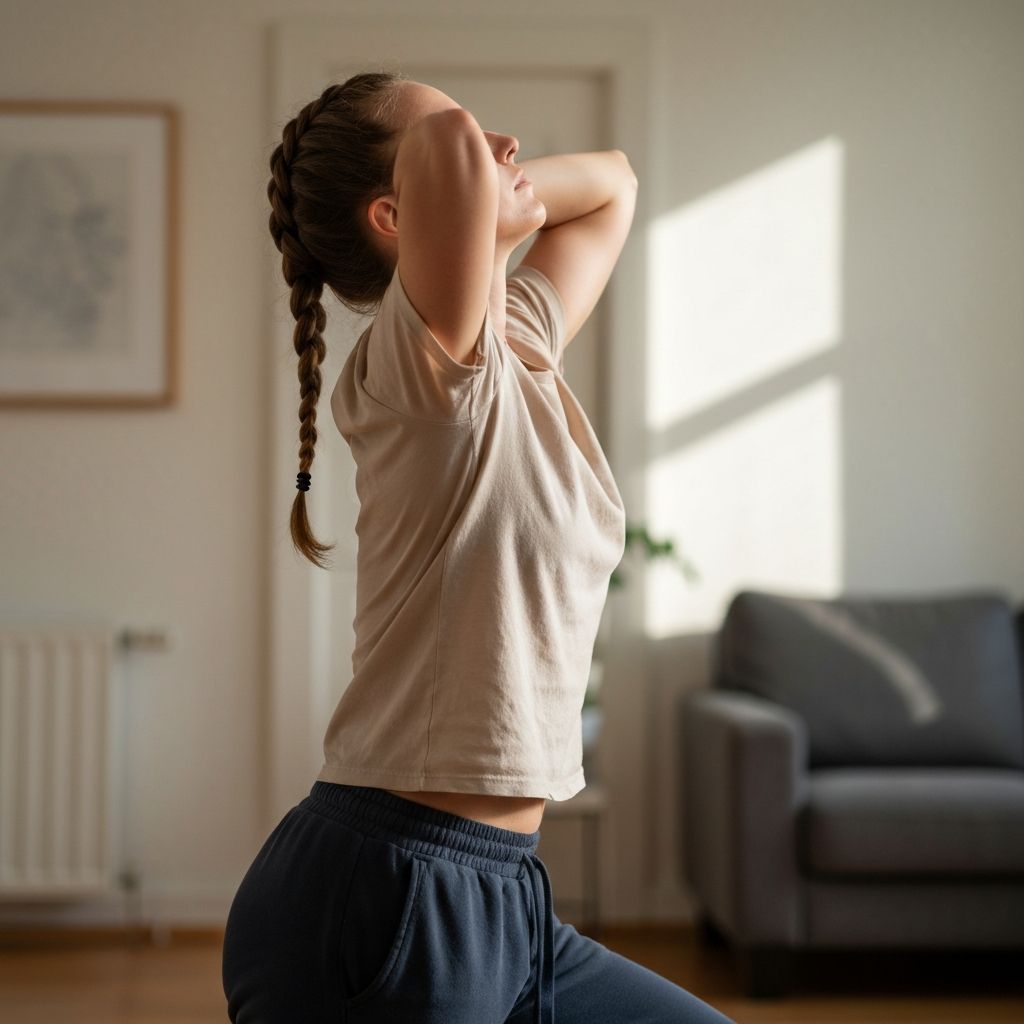
Gentle neck tilts and rotations are commonly practiced movements. These involve slowly tilting the head from side to side and performing gentle circular motions. Many people perform these movements while seated or standing.
Read Detailed Instructions
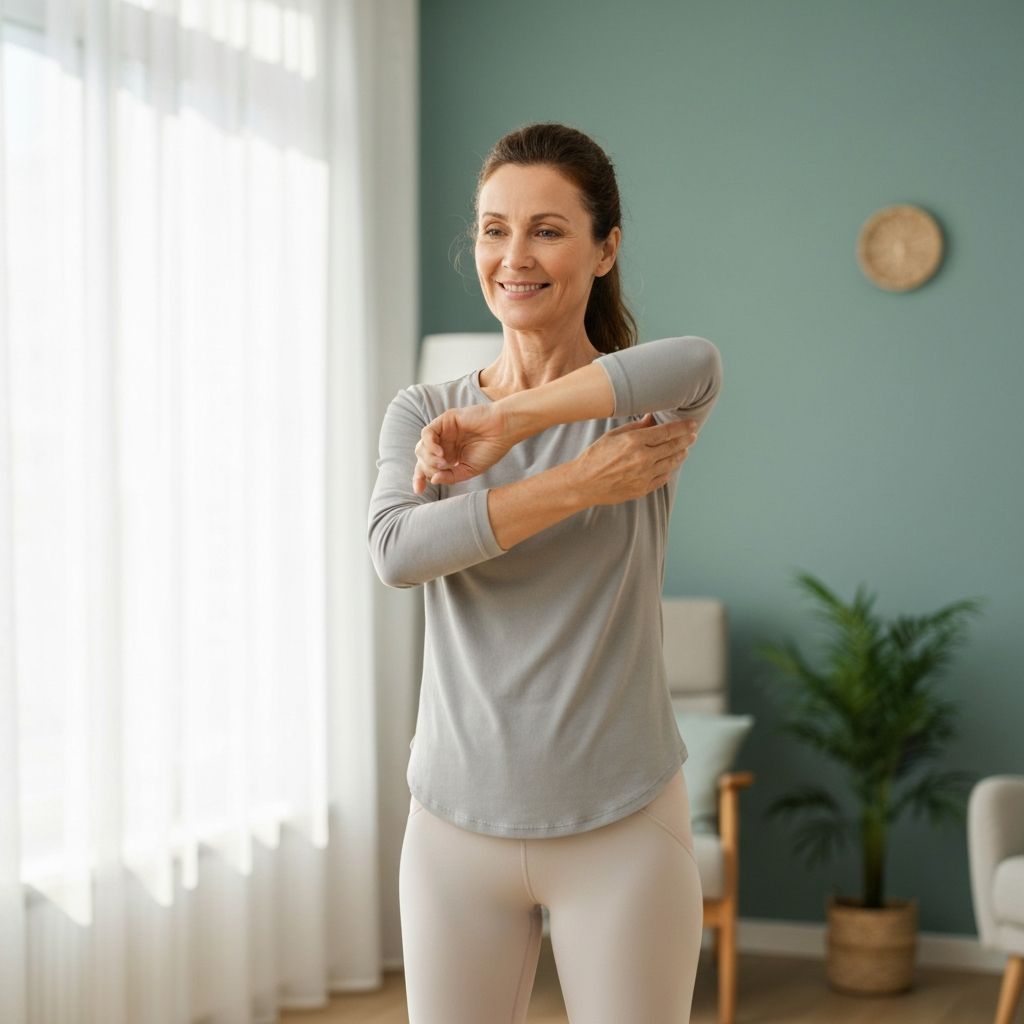
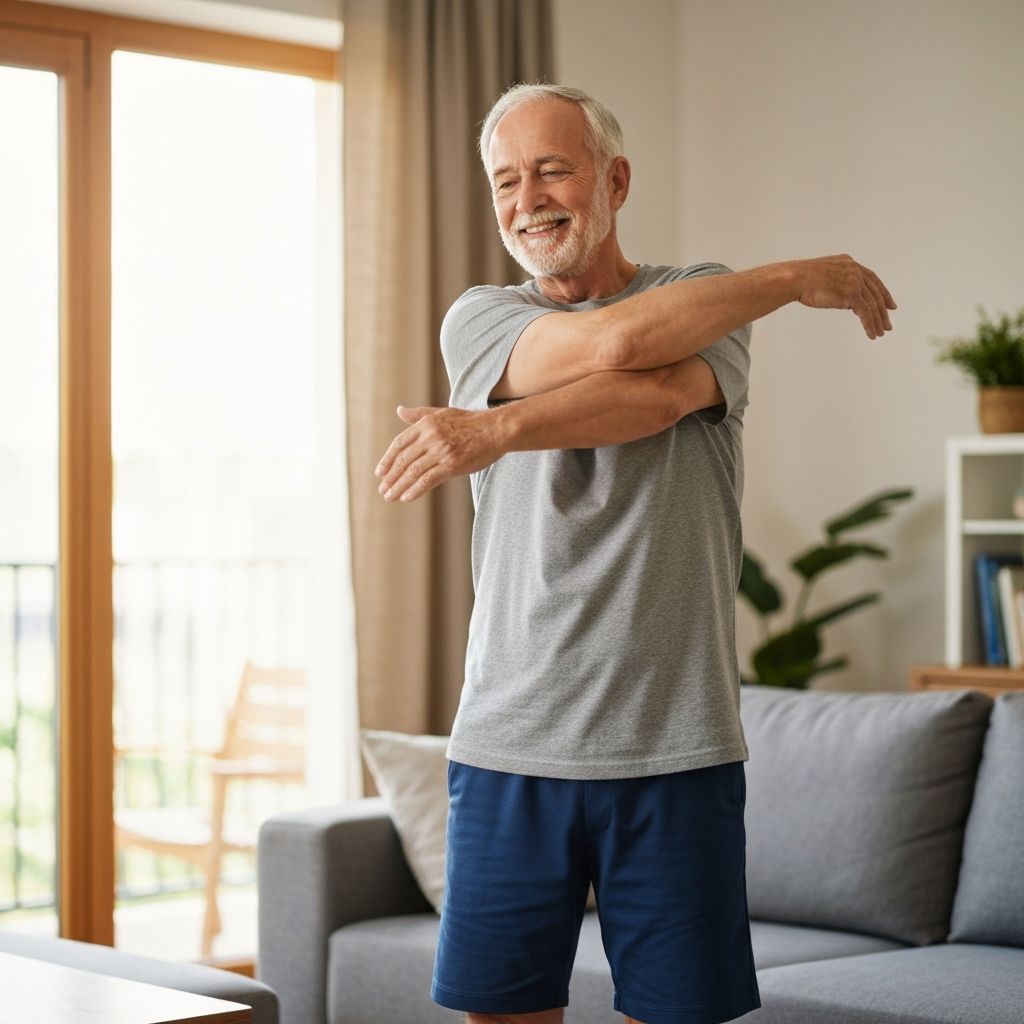
Shoulder circles involve rotating the shoulders forward and backward in a circular motion. This movement is often performed standing with arms relaxed at the sides. Various speeds and sizes of circles are commonly described.
Read Detailed Instructions
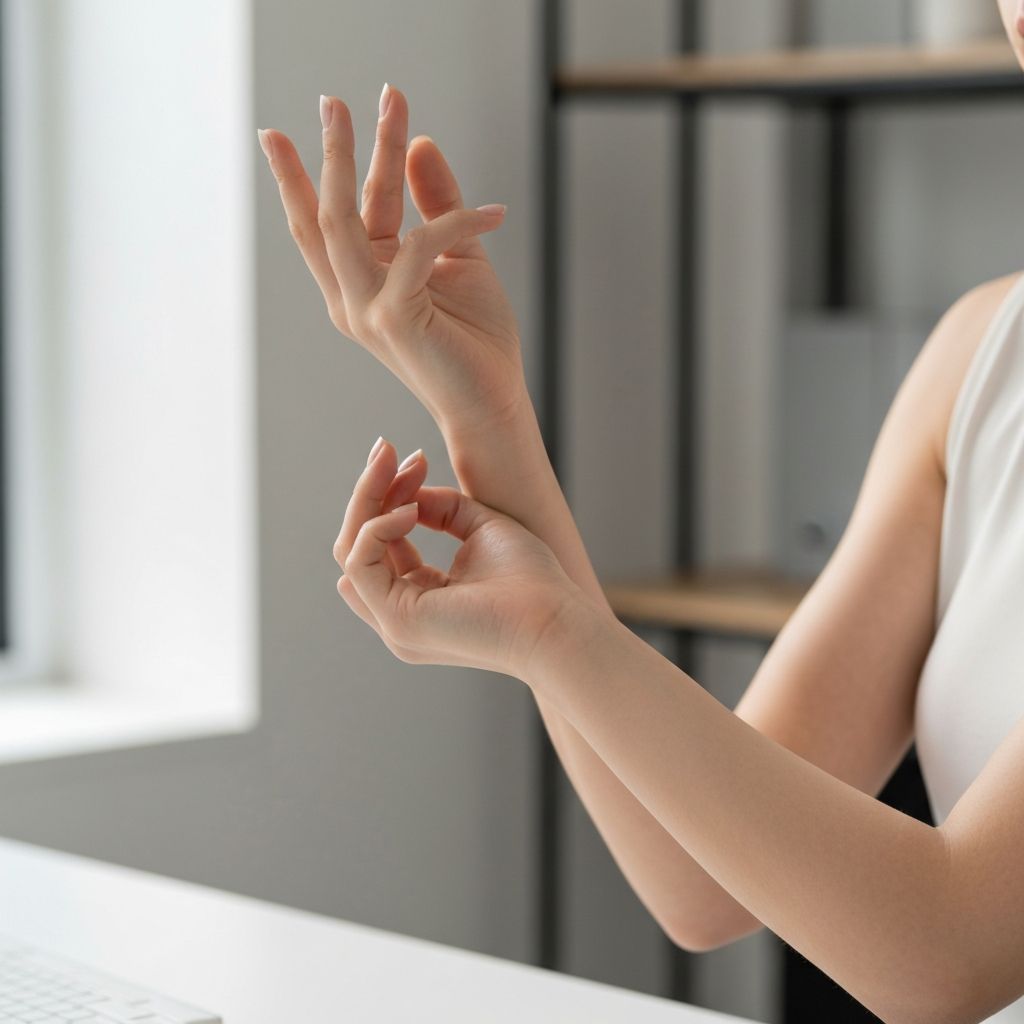
Wrist rotations involve moving the wrists in circular motions, both clockwise and counterclockwise. This movement is often described in contexts where people use their hands frequently throughout the day.
Read Detailed InstructionsThe movements described above are presented for informational purposes. Individual experiences vary, and these descriptions do not constitute personal recommendations. Consider your own circumstances when exploring any movement practice.
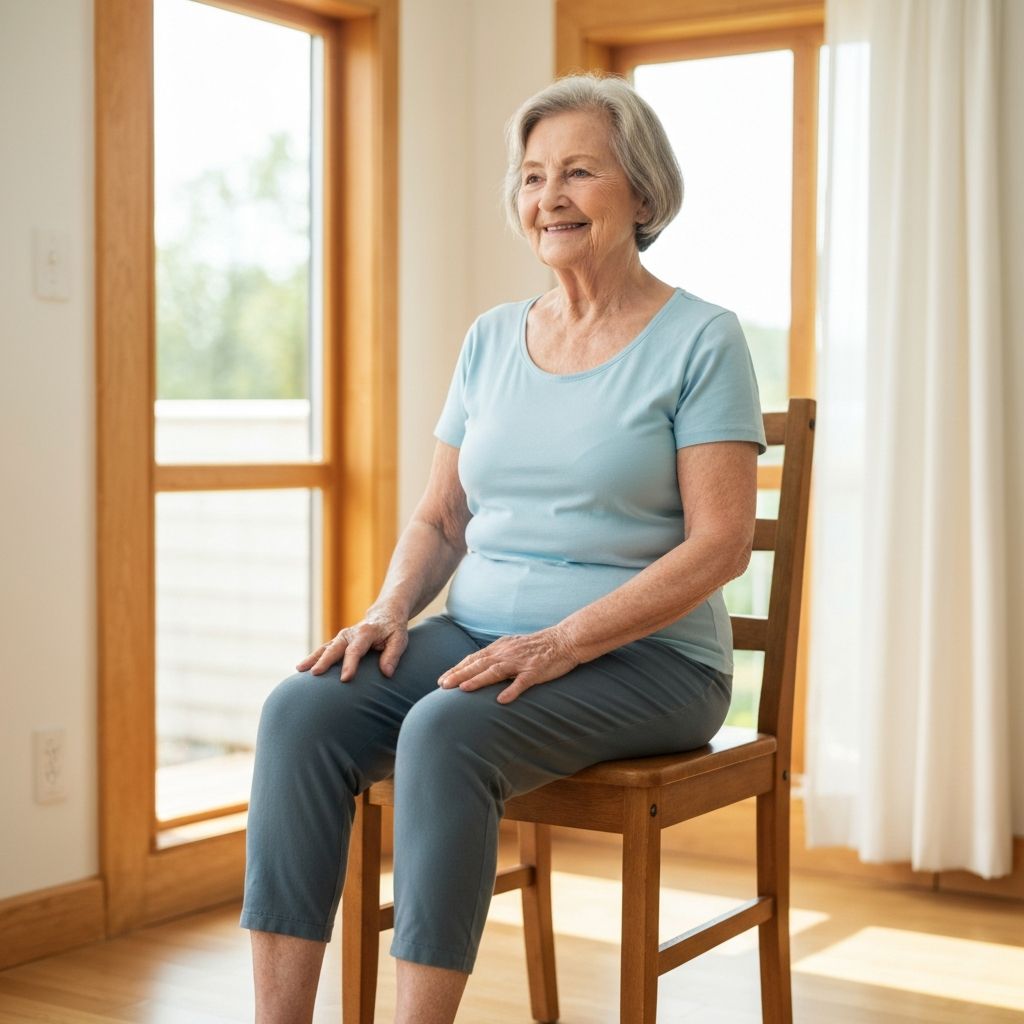
Chair-based movements are commonly explored by individuals who prefer seated exercises or have specific considerations that make standing movements less suitable. These movements utilize a sturdy chair as support.
Seated Leg Extensions: While seated, extending one leg at a time to a straightened position, then returning to the starting point. This movement focuses on the knee joint area.
Ankle Circles: While seated, lifting one foot slightly and rotating the ankle in circular motions. Many people perform this movement for each foot individually.
Seated Torso Twists: While seated with feet flat on the floor, gently rotating the upper body from side to side. This movement is often performed with hands resting on the thighs or crossed at the chest.
Explore Movements
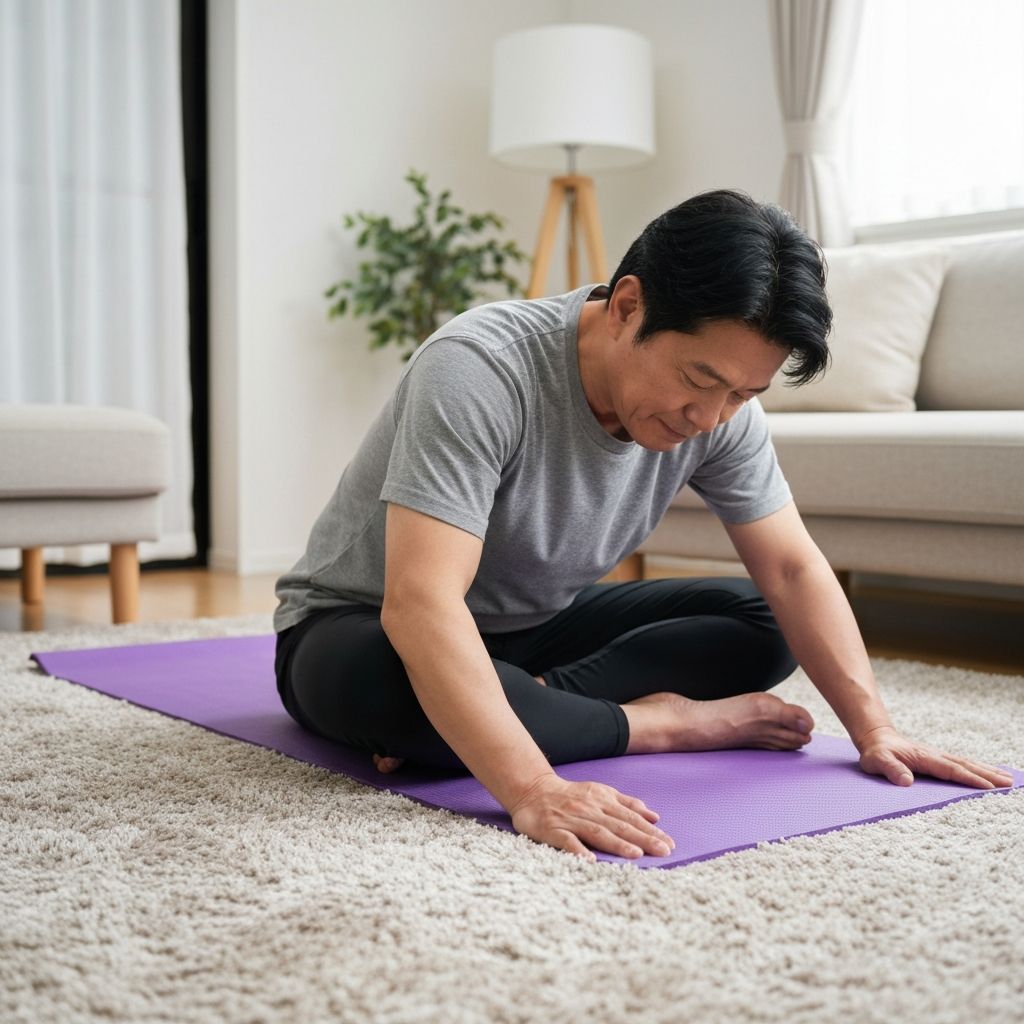
Floor-based exercises are movements performed while sitting or lying on the ground, often on a mat or soft surface. These positions can provide stability and support during certain types of stretches.
Seated Forward Reach: Sitting with legs extended, reaching arms toward the feet. This movement is often described as a way to explore hamstring and lower back flexibility.
Lying Hip Rotations: Lying on the back with knees bent, gently lowering both knees to one side, then the other. This movement involves rotation at the hip joints.
Cat-Cow Position: On hands and knees, alternating between arching and rounding the spine. This movement sequence is commonly referenced in various movement traditions.
Floor exercises may not be suitable for everyone. Individual comfort and circumstances vary. These descriptions are educational and do not replace personal judgment about what movements are appropriate for you.
Balance involves the ability to maintain stability while standing, moving, or changing positions. Coordination refers to how different body parts work together during movement. Both concepts are frequently discussed in the context of physical wellness.
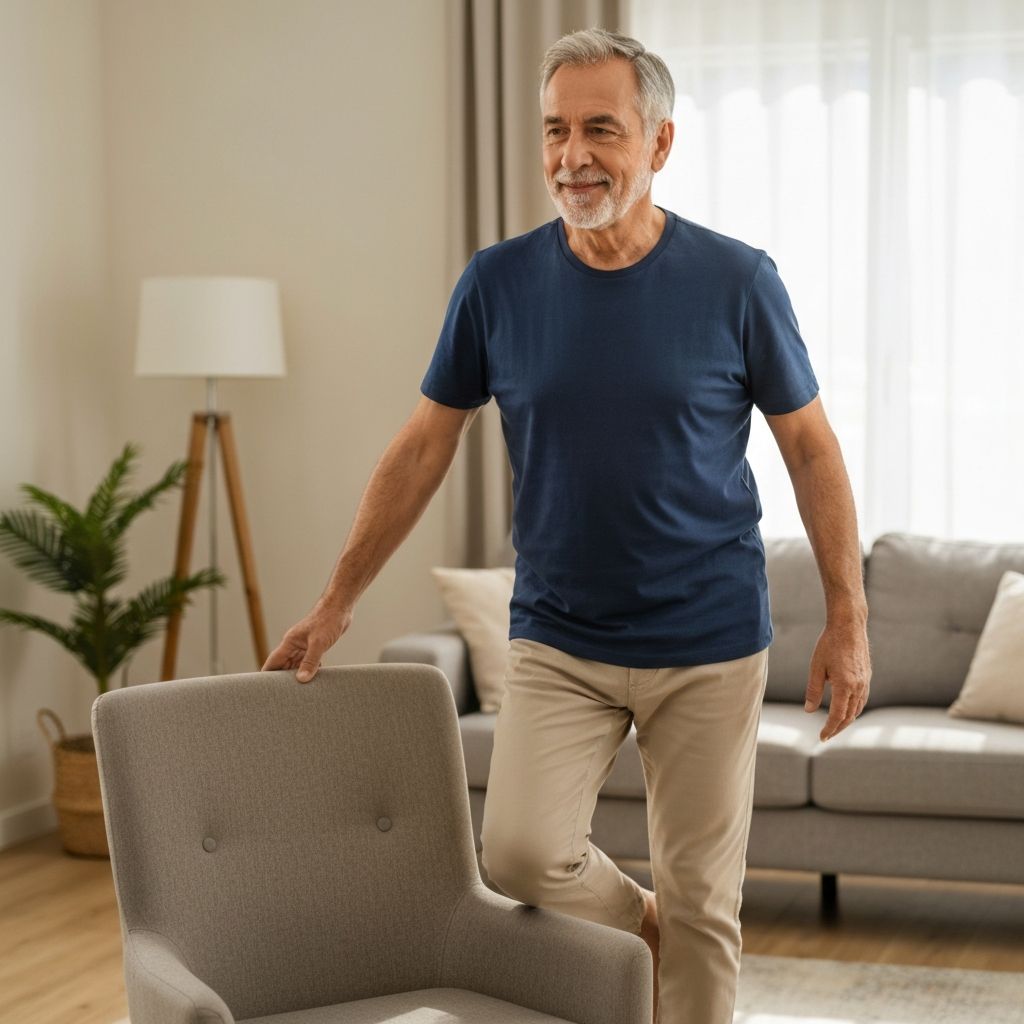
Single Leg Standing: Standing on one foot while holding a chair or wall for support. The duration and frequency of this practice varies among individuals.
Heel-to-Toe Walking: Walking in a straight line by placing the heel of one foot directly in front of the toes of the other foot. This movement is sometimes called tandem walking.
Weight Shifting: Standing with feet hip-width apart and slowly shifting weight from one foot to the other. This simple movement explores the body's balance mechanisms.
Balance practices are often discussed as one component of overall physical activity. Individual needs and capabilities vary significantly.
Many people find that establishing consistent times for movement practices helps them maintain regularity. Morning and evening are commonly mentioned timeframes, though individual schedules and preferences vary widely.
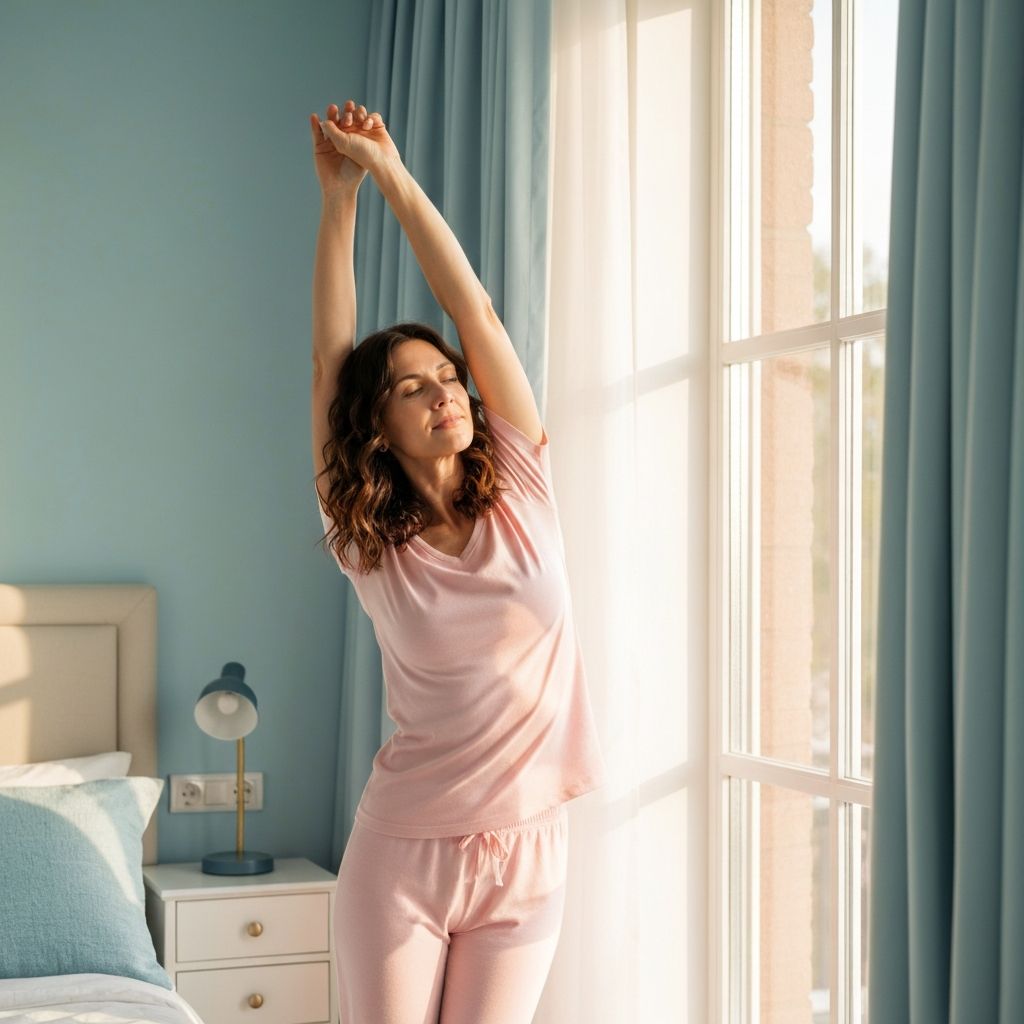
Some people incorporate gentle movements after waking as part of their morning routine. These often include slow stretches and gradual mobilization of joints. The specific movements and duration are highly individual.
Evening movement practices are sometimes described as focusing on relaxation and unwinding. Gentle stretches performed before sleep are mentioned by some as part of their nighttime routine.
The optimal timing and type of movement varies from person to person. What works for one individual may differ significantly from what another person finds suitable.
Explore MovementsJoint mobility refers to the ability of joints to move through their natural range of motion. This encompasses various joints throughout the body, including shoulders, hips, knees, ankles, elbows, and wrists. The concept is discussed in many contexts related to physical movement and everyday activities.
People of various ages and backgrounds explore gentle movement practices. The reasons vary widely, from general interest in physical activity to specific lifestyle considerations. Individual motivations and approaches differ significantly from person to person.
Various sources describe different frequencies for movement practices. Some mention daily routines, while others discuss less frequent approaches. The appropriate frequency depends on individual circumstances, preferences, and considerations that vary from person to person.
The movements described on this site are presented for educational purposes only. They may not be suitable for everyone. Individual circumstances, physical considerations, and personal factors vary significantly. This information does not replace personal judgment or individual decision-making.
This website provides educational information about daily movements and joint mobility concepts. It exists to explain topics related to gentle movement practices. This site does not provide personal advice, sell products or services, or make promises about outcomes.
Explore more educational content about daily movement practices and joint mobility concepts.
Explore MovementsIf you have questions about the educational content on this website, you may use this form to send a message.
JointEase
Na Příkopě 12
Prague, Czechia
Phone: +420 725 438 962
Email: [email protected]
The following resources provide additional educational information about movement and joint mobility concepts. These external sources are provided for informational purposes only.
Links to external resources are provided for educational purposes. JointEase does not control or endorse the content of external websites. Users should evaluate external sources independently.